
Faulkner County Arrest Log Sources
Faulkner County publishes no promised 72-hour, seven-day, or weekly arrest log. The closest official surface is the 48 Hour Release view. It shows people released from the Faulkner County Detention Center within that window. Remember what it is. The list tracks releases, not every arrest made during the same stretch. A fresh booking can be absent. A separate FCSO Calls for Service table covers recent incident activity. Its fields cover calls, cases, places, times, and incident types. FCSO itself cautions that sensitive categories are excluded. The table is not official crime data. A dispatch call may close without an arrest. An arrest, meanwhile, can reach Booking without ever surfacing as a public call row.
The official 48 Hour Release capture shows the county's real published release window.
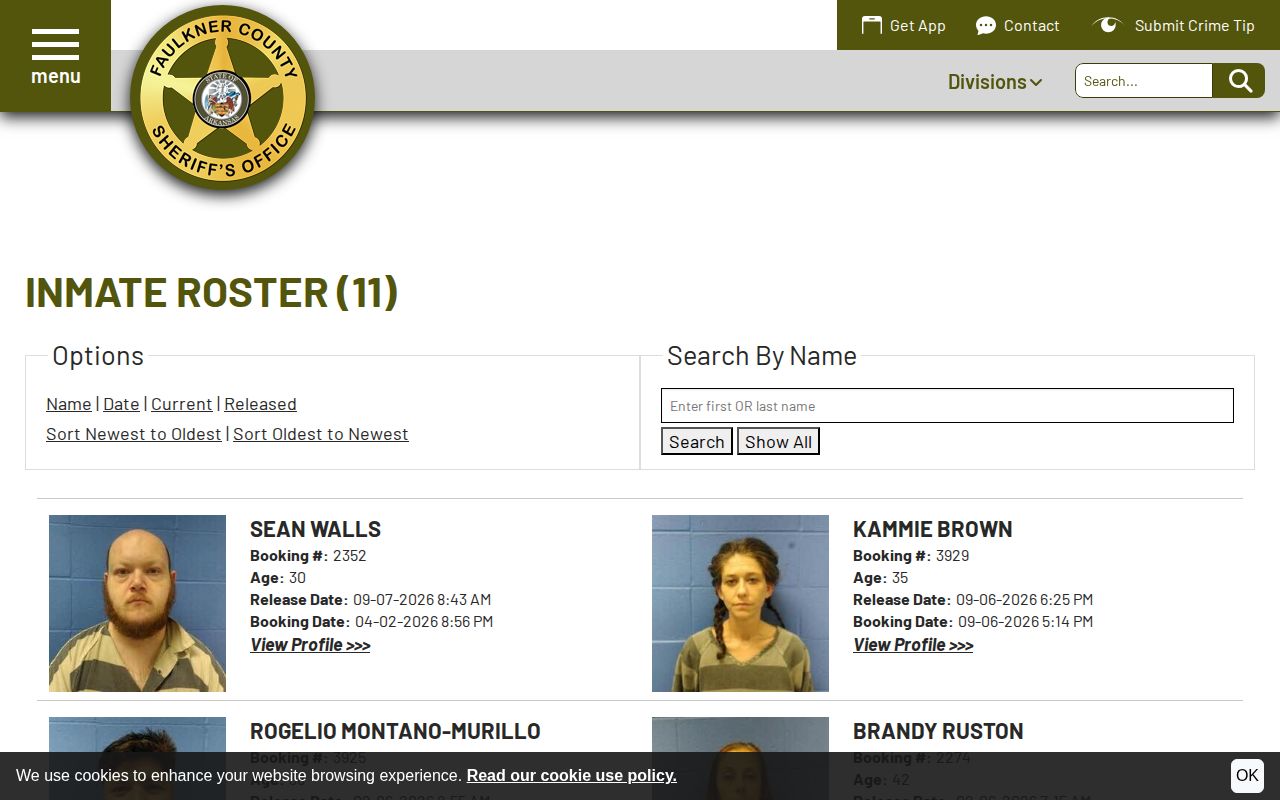
The release timestamp is the key field here. It shows when someone left custody, not how a case ended. A booking record in Faulkner County carries no verdict.
Read Faulkner Arrest Records
Search by event stage rather than treating every source as a copy of the others. Start with custody and work toward the lasting record. Keep a note of the source name whenever you copy a fact from a page that changes.
- Review the FCSO 48 Hour Release view by newest release time and compare name, age, booking number, booking time, and profile.
- Check Current Inmates if the person may still be held. A current entry and a release entry describe different custody states.
- Use FCSO or Conway calls-for-service tables only for incident context. Match the case number and time, but do not infer an arrest.
- Search Arkansas Courts after filing and compare county, court, case number, and dates for later events.
- Request the jail log, booking sheet, or agency report when the public window no longer contains the needed entry.
The newest bookings fit a narrower question. The 24 Hour Arrests page handles that one directly. An arrest-log method works differently, tracking entries across several days and past what the web window shows.
Faulkner Arrest Log Fields
Field names differ because Faulkner County issues several record types rather than one unified blotter. A field means what its own system says it means. Read each one inside the record that created it.
| Source and field | Proper reading |
|---|---|
| Release view: name, age, booking number | Identity clues for the jail entry, not a final identity finding. |
| Release and booking timestamps | When custody entry and exit were recorded, not necessarily incident time. |
| Photo and profile | Official roster presentation during the operational window, not a permanent archive. |
| Current roster: charges and bond | Intake charges and booking-stage conditions that can change. |
| Calls table: call and case numbers | Dispatch or incident references that do not prove a detention booking. |
| Court docket: filings and disposition | Later case stages and the recorded outcome. |
FCSO Booking can give you an arresting agency and a court date by phone. The list card may leave those fields out. Under the state jail-log rule, the underlying log may hold arrest and confinement times, the reason for confinement, and officer information. It may also hold warrant or commitment data, and release details. A public copy can still be redacted where law requires it. When two people share a name, the booking number is the strongest visible reference. Age helps, but age is not unique. The booking photograph comes from Unit Two intake. It appears on the roster only while the entry stays in its public window. Do not download or republish it. Timing also needs care. A booking time can lag the incident or warrant time. A court commitment can even create a detention entry without any new street arrest. That distinction matters when you build a sequence across days.
Faulkner Weekend Arrest Timing
The detention center never closes. Intake and release can land on weekends and holidays. FCSO posts no weekend schedule, surge report, or set web batch time. Minute-level roster timestamps show operational entries. They do not show how fast each record reached the public page. So skip the idea of a weekend arrest total. A quick booking-and-release shows up in the 48-hour list. Someone still held sits in Current. An incident visible in calls for service may produce neither entry. Refresh both custody views, and if timing is critical, call Unit Two Booking at 501-328-4160.
Conway runs its own calls-for-service table. It lists call number, case number, address, call time, and incident type. The city offers the same warning. It is not official crime data, and sensitive categories are omitted. Conway Police and FCSO can both respond to one event. City and county rows may describe different slices of the same call. Never merge either table into the detention log without a matching booking record. The official calls-for-service table documents that separate incident list used for context.
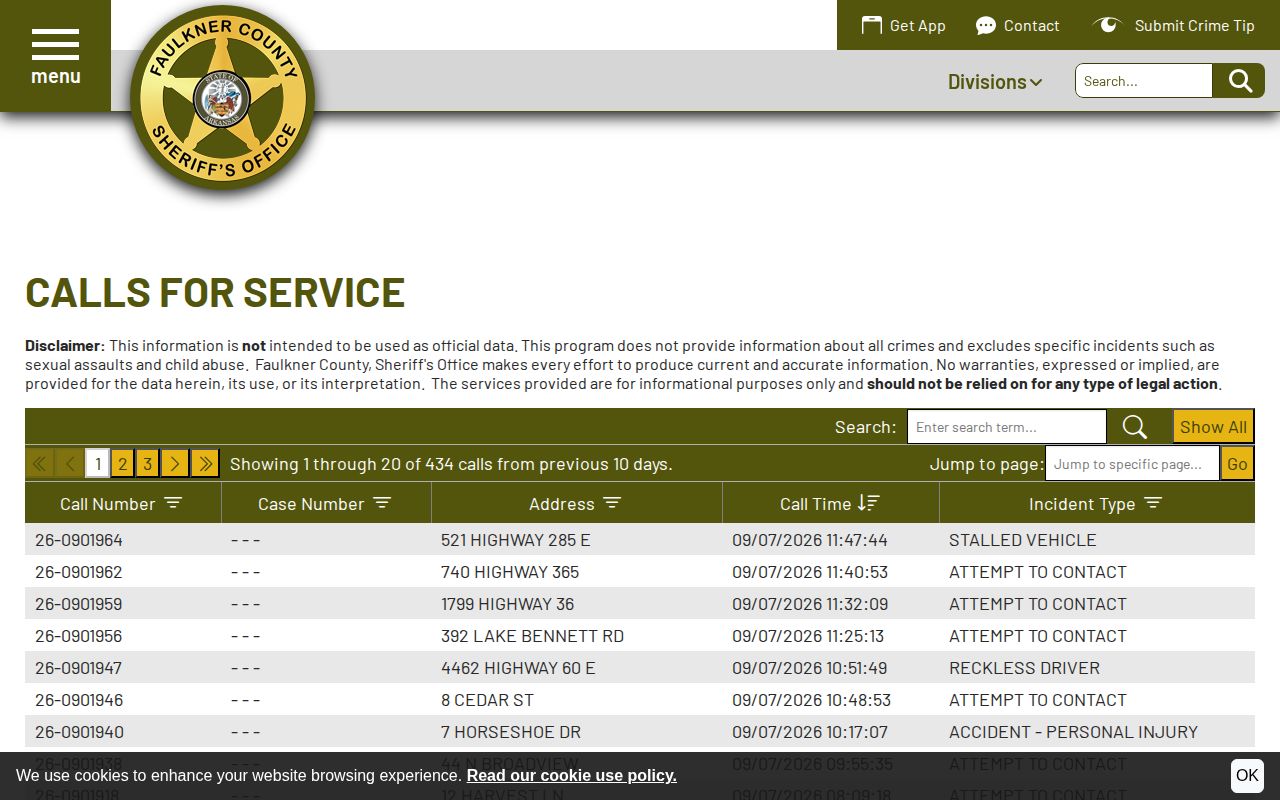
Count case and call rows as incident context, never as a booking list. Note: An arrest can move through several systems at different times, so a wider date range helps reconcile the incident, booking, release, and filing dates.
Faulkner Arrest Log Archives
The online roster shows who is in custody now. It is not a historic archive. Once an entry rolls past the 48-hour window, the underlying Faulkner County record becomes the thing to request. The county records-request page offers a NextRequest portal, a printable form, mail, and in-person delivery. Name the custodian, the person, the booking number, a date range, the arresting agency, and the exact record sought.
A request can target a booking intake sheet, a jail-log entry, a release record, a booking photograph, a bond-book entry, or a public arrest report. FCSO charges $2 for a booking intake-sheet copy. An incident report copy also runs $2. Confirm current costs and delivery terms before sending payment. Arkansas FOIA presumes public access to records, though juvenile confidentiality, sealed matters, protected victim facts, and investigative exemptions can narrow what an office releases.
Ask for electronic copies when practical. Request a written explanation for anything withheld or redacted. The sheriff keeps the detention log, but the incident report that led to the arrest may sit with a city police department. Conway Police asks report requesters for a report number or an incident date and address. Greenbrier and Vilonia publish no separate arrest-log pages. Their police contacts plus county booking records are the practical fallback for tracking Faulkner County recent arrests in those cities.
Case history lives with the Faulkner County Circuit Clerk. That office holds dockets, warrants, orders, judgments, and dispositions. Its electronic depth reaches far beyond the jail website's short window. Search ARCourts can supply later public case events. Older or unscanned material may still need a clerk request. Archive research should end at the court disposition rather than the first booking entry, since charges can change after an arrest.
The clerk's own dates chart the court-record depth. Court cases were scanned back to 2000 and orders to 1997. Public portal records reach back to January 1, 2009. Electronic filing began June 1, 2016. Those dates describe court files only. They do not extend the FCSO roster window or promise that every older item is online. Ask the clerk about unscanned material and confirm the current copy procedure before leaning on a historic docket.
Retention rules differ from web display. County and municipal records may be transferred, preserved, or destroyed under state schedules and notice rules. The roster can drop an entry much sooner. A stale search-engine cache proves nothing about current custody. Get the source record or correction first. Then treat any outdated search result as a separate publication problem.
For a clean timeline, request the booking time, the release time, and the arrest date. Add the arresting agency and any commitment or warrant data when it matters. That keeps the incident, the confinement, and the release distinct instead of forcing one timestamp to carry all three.
Faulkner Arrest News Blotters
News coverage can fill in the story around a Faulkner County arrest. The Log Cabin Democrat runs a recurring Police Beat section. It has covered FCSO, Conway, Mayflower, and the detention center. TriArk Radio republishes regional booking material too. None of these outlets is an official custody system or a complete arrest log.
Commercial sites keep entries alive after a page changes. That includes RecentlyBooked, Arrests.org, Mugshots.zone, and Busted Newspaper. They may list names, dates, charges, bonds, agencies, and photos. Coverage can be stale, incomplete, duplicated, or mislabeled. Check each lead with FCSO and the court.
A dated article may explain a joint operation or quote an agency statement. It can still omit release or dismissal facts. Publication date and event date are separate facts. When a story links back to FCSO, inspect the live custody source. Then locate the court case. Article counts never equal a trend. Neither do call rows or third-party posts.
The TriArk Radio page shows one unofficial regional channel that publishes Faulkner County booking material. It helps map the local information landscape, not settle it.
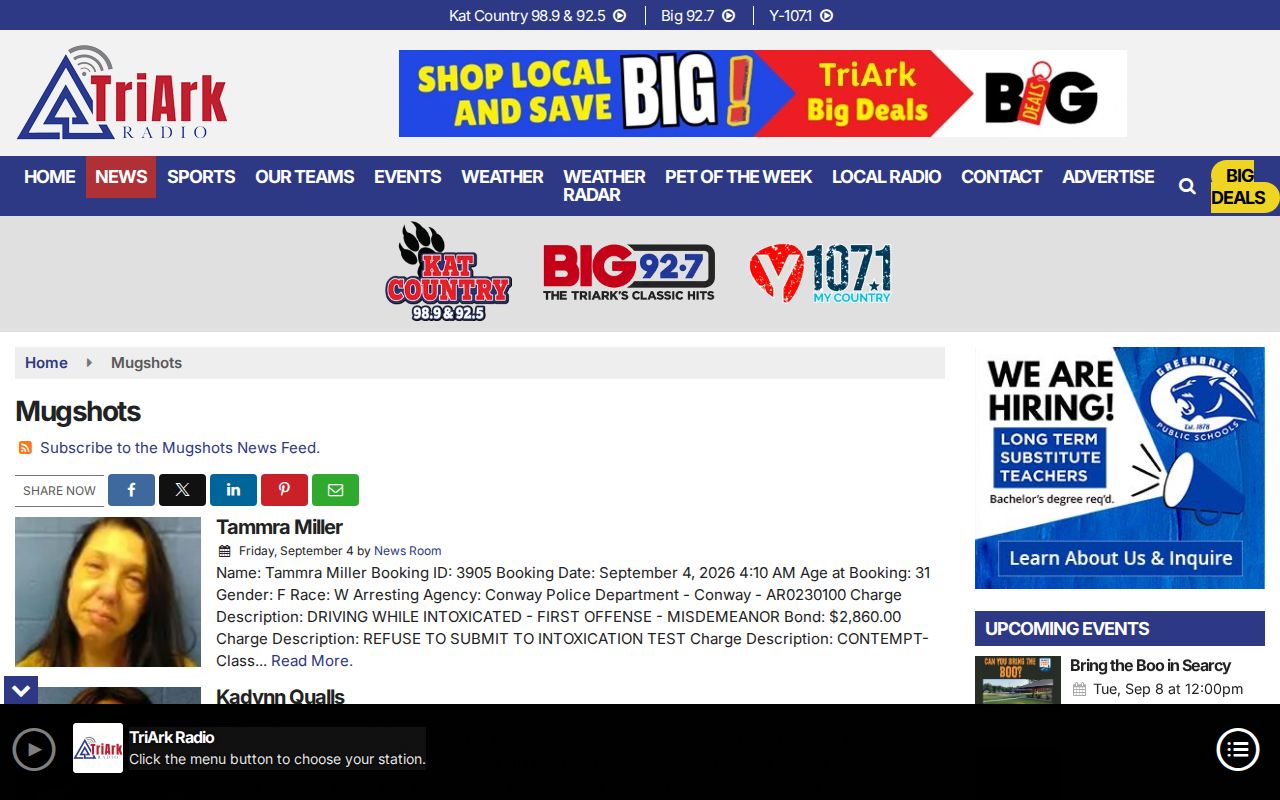
TriArk Radio is one voice in the mix. Unlike the sheriff's roster, it is an unofficial channel. Treat its booking entries as leads, not settled facts. Anything that matters should be confirmed against FCSO or the court record.
Public Record Search
Sponsored Results